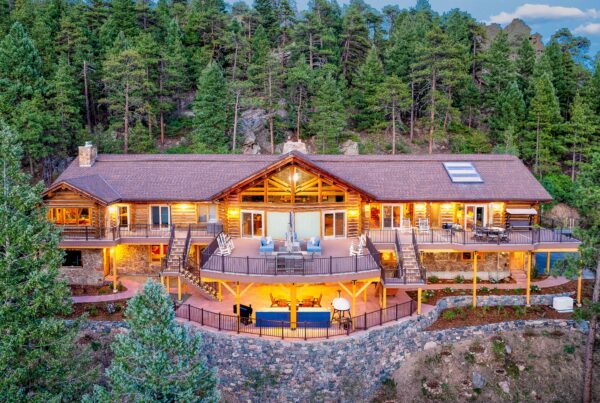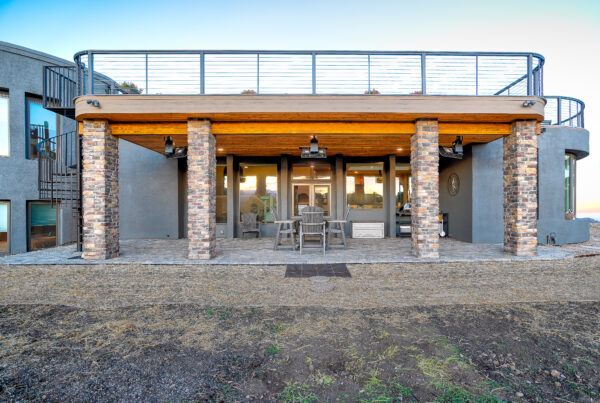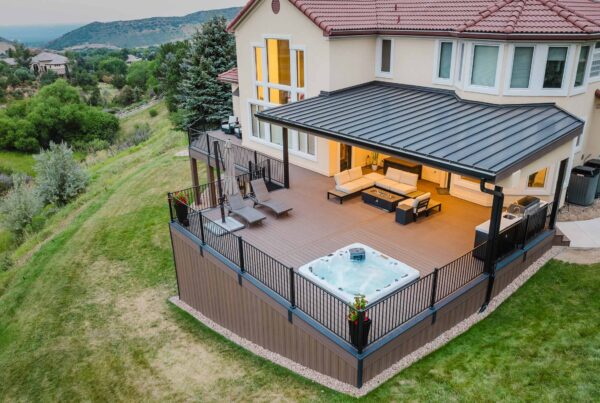
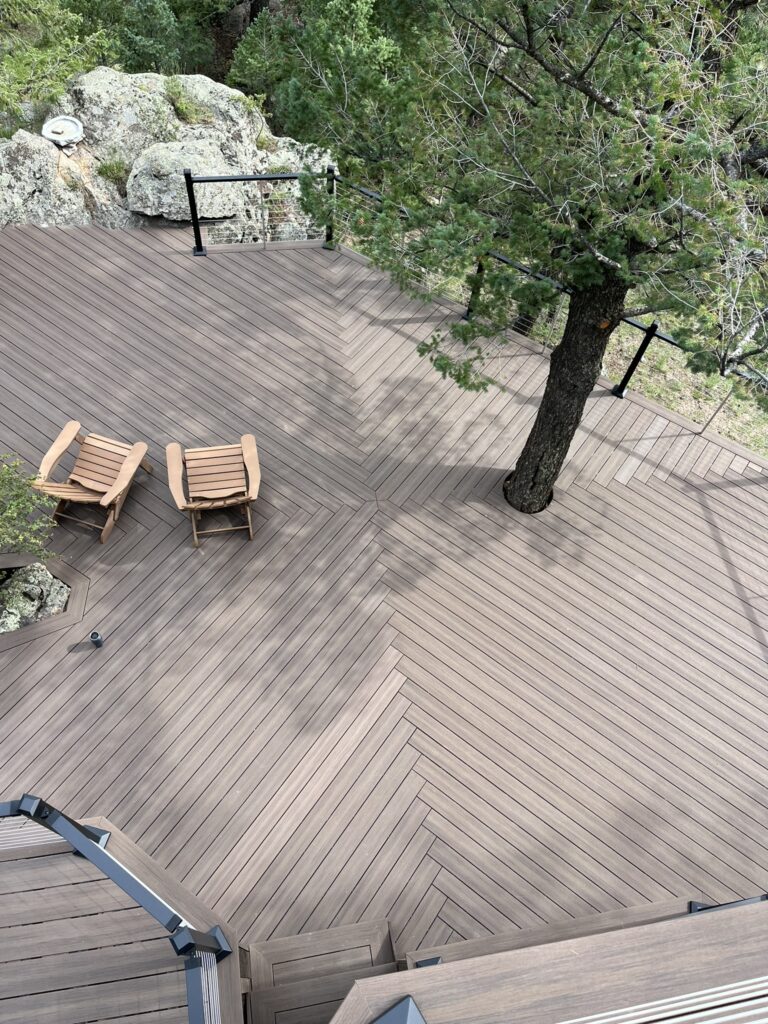
Colorado homeowners face a unique set of challenges when choosing outdoor building materials. High-altitude UV exposure, significant temperature swings between seasons, heavy snow loads, and low humidity that shifts dramatically with elevation all influence how decking materials perform over time. Composite decking has become the preferred solution for homeowners across the Front Range and mountain foothills who want a deck that holds up through all of it without demanding constant attention. As a Deckorators Certified Elite Builder, Colorado Custom Covers & Decks answers these questions every day. Here are the ones that come up most often.
What exactly is composite decking and how is it different from wood?
Composite decking is an engineered building material made from a combination of wood fibers, recycled plastics, and binding agents. The manufacturing process produces boards that look like wood but behave very differently when exposed to the elements.
Natural wood expands, contracts, absorbs moisture, develops rot, and requires ongoing finishing work to stay in acceptable condition. Composite decking is engineered specifically to resist all of those failure points. It does not absorb water the way wood does, which means it does not rot, warp, or develop the mold and mildew problems that plague untreated wood surfaces in wet conditions.
For Colorado homeowners specifically, composite decking handles the freeze-thaw cycling that damages wood over repeated winters, resists the UV degradation that Colorado’s high-altitude sun accelerates, and maintains its appearance without the annual staining and sealing routine that wood demands.
Is composite decking actually worth the higher upfront cost?
This question almost always comes down to how you calculate cost. Composite decking costs more than pressure-treated lumber at the point of purchase. That part is straightforward. What the upfront comparison misses is everything that happens over the following ten to twenty years.
Wood decking requires staining or sealing on a regular schedule, board replacement as sections rot or warp, and ongoing inspection to catch structural problems before they become expensive. Composite decking requires none of that. It needs occasional cleaning and prompt attention to spills, but it does not need to be refinished, re-stained, or structurally repaired on any predictable cycle.
When you add up those maintenance costs over a realistic ownership period, composite decking consistently comes out ahead. For homeowners planning to stay in their home long-term, or for anyone who simply does not want to spend summer weekends maintaining their deck, the math favors composite decking clearly.
How do you choose the right composite decking product?
Not all composite decking products perform equally, and the differences matter more in Colorado’s climate than they would in a milder region. Color selection and board width are straightforward personal choices, but the performance specifications underneath the aesthetics are where the real decision lives.
Fade resistance is critical at Colorado elevations. UV exposure at 5,000 to 10,000 feet is significantly more intense than at sea level, and composite decking products with inadequate UV protection will lose color and surface integrity faster than their specifications suggest. Look for products with strong fade and stain resistance ratings backed by substantial manufacturer warranties.
Scratch resistance matters for decks that see regular furniture use or pet traffic. Moisture performance matters for decks in snow-prone areas or those adjacent to pools and water features. Capped composite products, which wrap the board in a protective polymer shell on all exposed sides, outperform uncapped products across all of these categories and are the right choice for most Colorado applications.
As a Deckorators Certified Elite Builder, we work with Deckorators’ composite and mineral-based composite products because they consistently perform at the level Colorado conditions demand. Their Voyage and Vault collections are built with mineral-based composite technology that absorbs virtually no moisture, stays cooler underfoot than standard composite boards during hot summer afternoons, and maintains dimensional stability through the temperature extremes Colorado delivers across a single calendar year.
What does the construction process actually involve?
A well-built composite deck follows a structured sequence, and every phase of that sequence affects the final product’s performance and longevity.
The process starts with design and planning. Layout, elevation, size, traffic flow, stair placement, railing style, lighting, and any covered or screened features all get worked out before construction begins. This is where 3D modeling earns its value. Seeing the finished deck before anything is built catches design problems early and gives you confidence in the final plan.
Foundation work comes next. Footings are sized and placed based on deck height, load requirements, and local soil conditions. In Colorado’s mountain and foothill areas, soil conditions vary considerably, and getting the foundation right is not a step to shortcut. The framing is then built on top of those footings using materials appropriate for the application and compliant with local building codes.
Composite decking installation requires manufacturer-approved fastening systems that account for the thermal expansion composite boards experience across temperature ranges. Boards installed without proper spacing and fastening will buckle, gap unevenly, or develop surface stress over time. This is one of the areas where working with a certified installer makes a tangible difference.
Railings, stairs, trim, and any custom features complete the installation. Every element needs to work together structurally and visually, and the finishing details are what separate a deck that looks professionally built from one that does not.
How much maintenance does composite decking actually require?
Far less than most homeowners expect, particularly those coming from a background of maintaining wood decks. Composite decking does not need to be stained, sealed, painted, or sanded at any point in its lifespan.
Routine care involves sweeping debris off the surface regularly, rinsing the deck down periodically, and cleaning with manufacturer-approved products when staining or buildup occurs. Furniture pads placed under chair and table legs prevent surface scratching over time. That is genuinely the full extent of what composite decking asks of you on an ongoing basis.
In Colorado, snow removal deserves a specific mention. Composite decking handles snow load well, but using metal-edged shovels can scratch the surface. A plastic shovel or a snow blower set slightly above the deck surface protects the boards while clearing snow effectively.
How does composite decking perform specifically in Colorado conditions?
Exceptionally well when it is the right product installed correctly. Colorado presents a combination of environmental stressors that would compromise lesser materials quickly: intense UV radiation, significant seasonal temperature variation, freeze-thaw cycling through winter, low humidity that shifts dramatically with weather patterns, and heavy snow loads in mountain and foothill communities.
Composite decking engineered for these conditions handles all of them. The capped surface resists UV degradation. The board composition does not absorb the moisture that causes freeze-thaw damage in wood. The structural integrity remains consistent across temperature ranges that would cause wood to check, crack, and pull fasteners over time.
Proper installation amplifies all of these performance advantages. A composite deck installed with correct fastening, appropriate expansion gaps, and properly sized framing will perform at the top of its rated lifespan. The same product installed incorrectly will show problems regardless of how strong the manufacturer’s specifications are.
What should I look for in a composite deck builder?
This is the question that determines everything else. A composite deck is only as good as the contractor who builds it, and the differences between qualified and unqualified installers are significant.
Look for demonstrated experience with composite-specific installation requirements. Composite decking is not installed the same way wood is, and contractors who primarily build with pressure-treated lumber may not understand the fastening, spacing, and framing requirements that composite products demand. Manufacturer certification, like Deckorators’ Certified Elite Builder designation, tells you that the contractor has been trained and vetted specifically on composite installation standards.
Ask about their design process. A contractor who offers design consultation, 3D modeling, and permit acquisition as part of their standard workflow is one who treats the full project seriously, not just the installation phase. Ask about their framing practices, footing methods, and how they handle drainage beneath the deck structure.
Check that they are properly licensed and insured, and ask for references from completed composite deck projects in Colorado specifically. A deck that performs well in a mild climate may not reflect how the contractor’s work holds up through a Colorado winter.
Colorado Custom Covers & Decks
Colorado Custom Covers & Decks is a Deckorators Certified Elite Builder serving homeowners in Morrison, CO and throughout the surrounding mountain and foothill communities. We specialize in custom-designed composite decking installations built for Colorado’s specific climate demands, and we manage every phase of the project from initial design through permitting and final construction.
Call us at (720) 301-5535 to schedule a consultation and get expert guidance on building a composite deck that performs the way Colorado requires.