A fireplace can give an outdoor space a natural center for dinners, quiet evenings, and time with friends. The best spot depends on more than the view. Smoke, wind, walking paths, nearby trees, clearances, and the fireplace’s weight all matter. Custom outdoor fireplace installation needs careful planning, especially near a deck, pergola, or covered patio. In Colorado, snow, drainage, freeze-thaw cycles, and local fire rules shape the plan too. This guide walks through the main decisions so you can choose a design that feels comfortable on your property.
Key Takeaways
- Design for everyday use: Choose a style, fuel, size, and location that fit the yard, the seating, and Colorado weather.
- Check requirements before construction: Confirm permits, clearances, foundation needs, drainage, and utility work before the design is locked.
- Plan the full project: Compare kit and professional costs, then follow the manufacturer’s safety and care instructions.
Plan a Custom Outdoor Fireplace Installation
A custom outdoor fireplace can make a yard more comfortable and give an outdoor living area a clear focal point. Before choosing a design, think about how you will use the space, how the fireplace will sit with the house, and what kind of upkeep you are willing to take on. See how fire features fit a larger outdoor living space.
Picture a typical evening first. Will you gather with a few friends around lounge chairs, or host larger groups with separate dining and seating? Leave room to move around the furniture, and plan safe clearances between the fire, people, structures, and furnishings. Local fire rules, wind, and weather can change when and how you use it.
Compare fireplaces and fire pits
A fireplace and a fire pit both create a place to gather, but they feel different. A fireplace has a built structure that can serve as a strong visual anchor. Its opening and chimney help direct smoke upward, though wind and site conditions still matter. A fire pit feels more open, with seating arranged around the flame.
Compare the footprint, fuel, installation needs, and ongoing care before deciding. Think about ash removal, cleaning, weather exposure, and whether the feature will interfere with paths. Some outdoor designs pair fire features with flexible seating. Look at fireplace and fire pit options, then check local requirements so the choice fits the site.
Design a Fireplace for the Yard
A well-planned outdoor fireplace should fit the way you use the yard and feel at home beside the house, deck, and landscape. Start by picturing a typical evening. Will you gather with family, host friends, cook outdoors, or use the fireplace for several purposes? That answer guides fuel, size, seating, and placement.
Look at the whole space before choosing a design. Note doors, walkways, trees, views, and existing outdoor features. Consider the slope and how people will move between the house, the fireplace, and the seating. Snow, drainage, and wind can change where a fireplace works best and which materials are suitable.
Make the design decisions together, because each one affects the others. A large masonry fireplace needs more room and a different foundation than a compact gas model. If the fireplace will sit near a deck, confirm the structure can support the weight before you settle on a location. An experienced builder can coordinate these choices with the broader deck and outdoor living plans.
Choose wood or gas for how you will use it
If you enjoy tending a fire and the aroma of burning wood, a wood-burning design may suit you. It also means arranging safe firewood storage, removing ash, and checking local rules before lighting a fire. A gas fireplace is easier to turn on and off, but it needs an approved gas supply and properly selected components.
Choose the fuel early, because it changes the design, the installation, and the upkeep. Consider how often you will use the fireplace, who will tend it, and whether smoke could reach seating or neighbors. Designs range from traditional wood-burning features to modern gas fireplaces. See examples on the outdoor living page. Ask a qualified professional to assess gas connections.
Explore clean-lined styles, natural stone, and useful features
A fireplace can make a strong impression without elaborate detailing. Clean lines and a simple profile often complement contemporary homes. Natural stone brings texture and a more organic feel. Compare potential styles with the home’s exterior, the deck, and the patio materials so the combination feels cohesive.
You can also plan features that make the area more useful. A wide hearth may provide extra seating if it is designed for that purpose. Nearby counters or an outdoor kitchen can make serving food easier, and some fireplaces can be built for cooking. Be sure the firebox and materials are appropriate for that use. Keep each addition practical, and make sure it fits the available space.
Choose a spot for seating, views, wind, and smoke
Map how people will move through the yard before choosing a location. Leave enough room for chairs and walking paths, and keep access to doors clear. Check whether the fireplace could block a view you value or put guests in the path of foot traffic. Think about prevailing wind, nearby structures, and where smoke may travel, including toward a neighbor’s property.
A location that looks good on a plan may feel less comfortable once people gather or the wind shifts. Visit the proposed spot at different times of day, then use stakes or tape to mark the footprint. This helps you judge seating, sightlines, and clearances before construction. Fireplace placement affects smoke, wind, views, and seating. Confirm setbacks and required clearances with local authorities.
Coordinate it with the deck, patio, or outdoor kitchen
Treat the fireplace as part of the whole outdoor area. Its location, materials, and style should work with the deck or patio rather than compete with them. If you are planning a pergola, confirm that its position and materials meet the fireplace’s clearance requirements. For an outdoor kitchen, arrange cooking, serving, and seating so people can move comfortably between them.
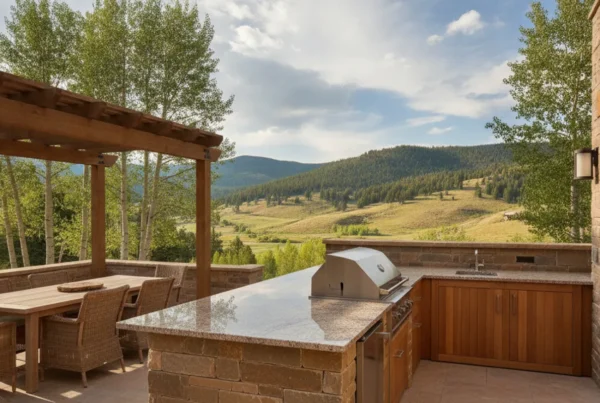
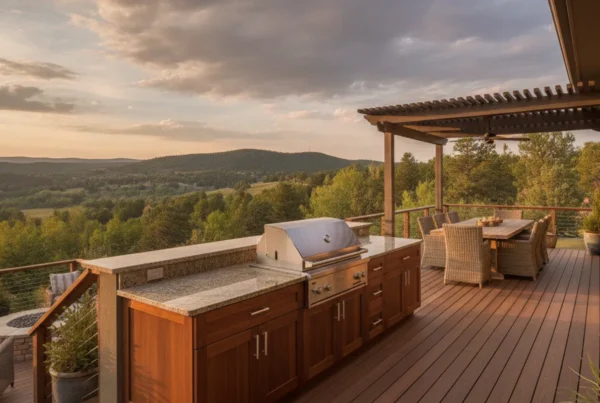
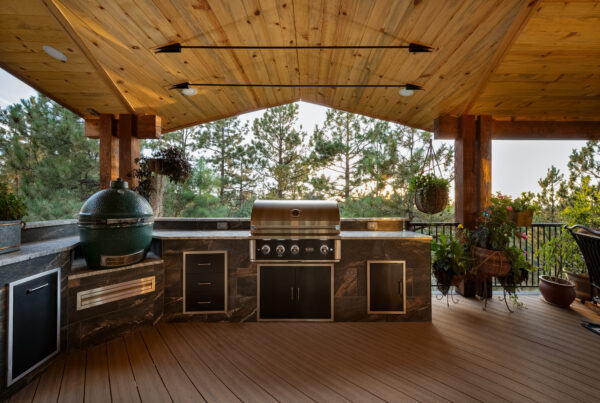
Pay close attention to weight if the fireplace will be near or on a deck. Masonry can be heavy, and an existing deck may not be designed to carry that load. Have the structure assessed before choosing a design or location. A builder can coordinate the fireplace with a residential decking project and identify whether a structural review is needed. Outdoor kitchen ideas show how a fireplace can sit beside cooking and patio features.
Plan for Colorado weather, drainage, and snow
Colorado weather should inform both the design and the location. Plan for snow, freeze-thaw cycles, and water draining away from the foundation. A qualified builder can recommend materials and foundation details for the site. Also consider where roof runoff will go and where snow will be piled, so melting water does not collect around the fireplace or nearby paths.
Ask how to protect the structure through changing seasons. The right approach depends on the materials, the fuel, and the exposure. Regular checks can help you spot cracks or wear early. Wildfire conditions may affect when and how you can use an outdoor fire, so check local restrictions before lighting it.
Understand the Installation Process
Custom outdoor fireplace installation covers more than choosing a style. The foundation, firebox, chimney, fuel connections, and surrounding space all need to work together. Reviewing these details before construction can help prevent costly changes and give the contractor a clear plan.
Slopes, snow, freeze-thaw cycles, and wildfire conditions can affect the location and the construction. Plans should account for weight, drainage, clearances, material access, and how the fireplace fits the deck or patio. If it is part of a larger project, coordinate it with deck and outdoor-living construction early. The local building department and the fireplace manufacturer are the right sources for project requirements.
Use this comparison while you plan. Confirm each item for the specific site.
| Decision | What to confirm |
|---|---|
| Site and design | Use, seating, views, access, utilities, and clearances. |
| Foundation | Weight, soil, slope, drainage, and local frost conditions. |
| Materials | Outdoor-rated masonry, firebox parts, and approved finishes. |
| Fuel | A wood-burning layout, or approved gas parts and connections. |
| First use | Inspections, curing instructions, and a safe first fire. |
Then move through the work in this order:
- Confirm the site and design before any materials are ordered.
- Design the foundation for the weight and the local frost conditions.
- Select outdoor-rated materials that match the chosen system.
- Plan the fuel layout and any required specialist connections.
- Finish inspections and follow the curing instructions before the first fire.
Confirm the design, site, plans, and permits
Begin by deciding how you plan to use the fireplace and where it should sit. Review the location for seating, views, access, utilities, nearby structures, and required clearances from combustible materials. A site review can also catch a slope, limited access, or a drainage problem before the design is final.
Confirm the plans, permit requirements, inspections, and construction sequence with the local building department. Requirements vary by location, so a design that works in one town may not meet the rules in another. Before work starts, agree on who will obtain permits, arrange inspections, and coordinate gas or electrical work.
Build a stable foundation for the weight and frost
A masonry fireplace can place substantial weight on its foundation. Soil, slope, drainage, and local frost depth all affect how the base should be designed. A contractor or structural professional can determine whether the project needs excavation, compacted aggregate, reinforced concrete, or other measures.
The foundation needs to be level and properly prepared before assembly begins. Dimensions are not one-size-fits-all. Follow the engineered plans, the local code, and the fireplace manufacturer’s instructions. If you are considering a deck location, confirm the structure can support the fireplace before the design is final.
Build and inspect to the plans and instructions
During construction, the crew should follow the approved plans and the manufacturer’s instructions at every stage. That includes assembling the firebox and chimney correctly, using the specified materials, and arranging required inspections before covering work that needs review. Keep the component documentation for later care and warranty questions.
Concrete, mortar, and other materials need to cure according to the product instructions and the site conditions. Do not light a fire until the contractor or manufacturer confirms the installation is ready. Some systems require a gradual first firing or a specific waiting period, so follow the directions for that model. Before first use, confirm the required inspections are complete.
Meet Permit and Fire-Safety Requirements
A safe outdoor fireplace starts with careful planning. Check local requirements before settling on a location, choosing a design, or scheduling construction. Rules can affect size, placement, materials, and utility connections, so confirming them early can help you avoid delays and costly changes.
Check local rules before construction
Contact the city or county building department before construction begins. Requirements may cover building permits, inspections, fireplace height, setbacks from property lines, and gas or electrical connections. A homeowners’ association may also have rules about placement, materials, or appearance.
Ask which plans and product details you need to submit, and whether inspections are required during construction or before the fireplace is used. If the fireplace will sit on or near a deck, include the deck’s structure in the planning. A contractor experienced with residential decking can help coordinate the fireplace with the surrounding outdoor space.
Keep clearances from combustible materials
Choose a location that keeps heat and sparks away from the home, deck, pergola, fencing, furniture, and nearby trees. Required clearances depend on the fireplace, the fuel, the manufacturer’s instructions, and local code. Do not use a measurement from another project as a substitute for the requirements on this installation.
Look above the fireplace as well as around it. Roofs, branches, and overhead structures can affect safe placement and ventilation. Before construction, mark the proposed footprint and check the clearance with the installer or the building department. Planning fireplace location and clearances early can help you avoid a redesign after work begins.
Plan for smoke, sparks, and safe fuel storage
A wood-burning fireplace needs a properly designed firebox, flue, and chimney to direct smoke away from people and nearby structures. Consider prevailing winds and seating when choosing the location, and install a spark arrestor if local rules or the design require one. Store firewood and other combustible materials at the distances specified by the manufacturer and local code.
Gas fireplaces have different installation needs. The appliance, gas line, and connections must meet applicable fuel-gas codes and manufacturer requirements. Have a qualified professional handle gas work, and ask how the system should be inspected. Use those requirements to decide which questions to raise before installation.
Check burn restrictions before each use
A permitted fireplace may still be affected by temporary burn restrictions. Before lighting it, check current notices from the local fire district or municipality, especially during dry or windy conditions. Also consider seasonal fire danger and nearby vegetation when choosing a location. Keep leaves, pine needles, and other debris away from the fireplace.
When the unit is not in use, follow the manufacturer’s instructions for covering or closing it. A cover can help keep debris out, but make sure the fireplace is fully cool before covering it, and use a cover intended for that model. Review the care instructions for the appliance before the season starts.
Choose a Kit or a Professional Build
A DIY kit can simplify some parts of an outdoor fireplace project, but it does not remove the need for careful planning. You still need a kit that suits the site, a stable foundation, the manufacturer’s instructions, and local building and fire-safety requirements. Before ordering, ask the municipality, and the homeowners’ association if you have one, about permits and clearances.
A professional build may be a better fit if you want a custom design, plan to add the fireplace near a deck or covered area, or have questions about the site or utilities. Consider your masonry experience, the equipment and time required, and whether you can safely handle heavy materials. In Colorado, also plan for drainage, snow, and local wildfire guidance.
Compare the kit with the site and local rules
Read the kit specifications carefully before you buy. Check the footprint, height, weight, fuel type, required clearances, and included components. Find out whether the package includes the firebox, chimney, flue, firebrick, insulation, and finish materials, or whether you will need to source some items separately.
Then compare the kit’s requirements with the planned location. Fixed dimensions or finish choices may not suit a sloped yard, a compact patio, or a space near a deck, roof, trees, or property line. Confirm local permits, setbacks, and fire rules before ordering. A manufacturer’s instructions do not replace local requirements.
Account for tools, time, permits, and inspections
The kit price may not include everything needed to finish the installation. Review the tool list and account for equipment you may need to rent or buy. Plan how you will move heavy blocks and other materials to the work area. A sloped yard, stairs, or limited access can make handling more difficult.
Before starting, list each stage: site preparation, foundation work, assembly, finishes, utility work, cleanup, and curing time. Then ask the local building department which permits and inspections apply. Do not assume a kit is exempt. If the project involves several trades, a contractor can help clarify the sequence.
Use a professional when the project is custom
A professional build gives you more room to shape the fireplace around the home and how you use the outdoor space. You can discuss size, materials, fuel, seating, views, and nearby features before work begins. Early planning can also surface practical concerns, such as access for materials or whether smoke will drift into seating.
A contractor can explain the project sequence and help identify permit needs, though responsibilities vary by contract and location. Colorado Custom Covers & Decks guides homeowners through design, engineered plans, permits, and construction for outdoor living projects. If you are considering a fireplace alongside a deck or patio cover, see the project approach and ask how the work could be coordinated.
Bring in specialists for structure, gas, and code
Some parts of a fireplace project call for expertise beyond general installation. If you plan to place a heavy masonry fireplace on or near a deck, confirm the structure can support the load before construction. A structural professional can assess the plans and recommend any support needed. Do not assume an existing deck can carry a fireplace just because it supports furniture.
Gas lines, electrical components, and code questions also need careful attention. Use qualified specialists for utility connections, and ask the local building department about the rules that apply. Share the fireplace specifications and proposed location so they can give useful guidance. For a connected deck, a contractor experienced in residential deck construction can help identify where the plans need to be considered together.
Estimate Installation Costs
A custom outdoor fireplace estimate should cover the whole project, not just the fireplace structure. Design choices, fuel, site access, foundation work, utilities, permits, and finishing can all affect the final cost. Before asking for bids, consider how you plan to use the fireplace and which features matter most. Prices are project-specific quotes, not a package or a guaranteed total.
For Colorado homes, slopes, snow, drainage, and access for materials or equipment can shape the work. Ask each contractor for a written scope that lists what is included, what is excluded, and which costs may change after site preparation. That makes it easier to compare estimates on equal terms.
Budget for plans, permits, and labor
Depending on the design, fuel, and location, the project may require design work, engineered plans, permits, or inspections. Contact the municipality early to confirm requirements for the property, and check whether the homeowners’ association has an approval process. Ask contractors which fees are included and which items you will arrange separately.
Labor may include site preparation, foundation work, masonry, utility coordination, finishing, and cleanup. Request a written scope that lists the work, the specified materials, and the exclusions. Colorado Custom Covers & Decks supports homeowners from design and planning through construction.
Compare a kit’s price with the full cost of tools and extra materials
A fireplace kit can simplify some design and material choices, but the listed price may not cover everything needed for installation. Review the included components, such as the firebox, chimney parts, insulation, mortar, and finish materials. You may still need to pay for a foundation, delivery, equipment rental, extra supplies, and labor.
For a DIY project, add the cost of tools, protective gear, and time for construction and inspections. Tools suited to masonry work include levels, trowels, and ladders, along with whatever else the kit instructions list. Compare the full DIY cost with a professional estimate that includes preparation and cleanup. Before buying a kit, confirm that its design suits the site and local requirements.
Plan for fuel, weather, and later care
Installation is only part of the long-term cost. Estimate fuel use based on how often you plan to use the fireplace, and ask what regular cleaning or service the chosen system needs. Wood-burning fireplaces require safe fuel storage and ash removal. Gas systems may need periodic checks by a qualified professional.
Colorado weather can wear on masonry, mortar, and finishes. Snow, moisture, freeze-thaw cycles, and sun exposure are worth discussing during planning. Ask whether the design needs drainage improvements or weather protection, and follow care instructions from the builder and the manufacturers. Set aside money for cleaning, inspections, and later service.
Avoid Common Mistakes
An outdoor fireplace needs a stable base, careful installation, and regular attention to stay safe and work as intended. Plan for weight, drainage, clearances, and local requirements before construction. After installation, follow the manufacturer’s guidance and look over the fireplace regularly, especially after harsh weather.
Do not rush the foundation, drainage, or curing
A masonry fireplace can put substantial weight on its base. Confirm that the foundation is designed for the fireplace and the site, and direct rain and snowmelt away from it. Follow the installation instructions for the materials, including any required curing time. Do not substitute a general timeline for the instructions that came with the system.
Do not assume an existing deck can support a fireplace. Ask a qualified professional to assess its structure and load capacity before choosing a location. If you are planning a fireplace alongside a deck project, coordinate the designs early. Colorado Custom Covers & Decks helps homeowners plan residential decking as part of a connected outdoor living space.
Confirm weight and structure before you pick a spot
Consider the finished weight before settling on a location. Foundation requirements depend on the unit, the site, and local frost depth. Follow the manufacturer’s instructions for the chosen model rather than a figure from a different installation. Ask the manufacturer, designer, or contractor to confirm the foundation and clearance requirements.
Also check access for construction equipment, nearby utilities, drainage, and distances from buildings and combustible materials. Confirm these details before finalizing the layout or starting foundation work. A location that is easier to reach during construction is often easier to maintain later.
Follow curing instructions before the first fire
Masonry, mortar, and other fireplace materials may need time to cure before the first fire. Use the instructions supplied for the specific installation. Requirements vary by product and site, so follow the manufacturer’s directions rather than a general waiting period. Some systems also call for a gradual first firing.
Before lighting a fire, clear leaves, furniture, and other combustible materials from the firebox and the surrounding area. Keep children and pets at a safe distance, and have appropriate fire-control equipment nearby. Check local fire restrictions before use, particularly during dry or windy conditions. These checks matter in Colorado, where conditions can change quickly.
Look for cracks and arrange qualified gas checks
Inspect the masonry, mortar joints, firebox, hearth, and chimney on a regular basis. Look for cracks, loose or missing mortar, shifted stones, water marks, and signs of water intrusion. Check again after heavy snow, storms, or freeze-thaw conditions. If you notice damage, pause use until you know whether it affects safe operation.
Have a qualified professional inspect a gas fireplace at the intervals recommended by its manufacturer and by local requirements. If you notice an unusual odor or a change in flame behavior, stop using the fireplace and contact a qualified technician. Use a cover designed for the fireplace when appropriate, and follow the manufacturer’s instructions for snow, rain, and debris.
Plan the Fireplace With the Rest of the Outdoor Space
The best outdoor fireplace is the one that fits the way you already want to use the yard. Start with seating, views, wind, and the deck or cover you may be adding, then choose fuel, materials, and a location that can meet local rules. Colorado Custom Covers & Decks designs and builds decks and outdoor living spaces and can talk through a fireplace as part of that larger plan.
A free estimate covers the consultation and a detailed look at the project. Design, 3D plans, and engineering review come after the estimate is accepted. Get a free estimate or call (720) 301-5535 to talk through a custom outdoor fireplace with the deck, patio, or cover around it.
Frequently Asked Questions
Do I need a permit to build an outdoor fireplace in Colorado?
Permit requirements vary by city and county, and may depend on the design, fuel, location, and utility work. Contact the local building department before construction to confirm permits, inspections, setbacks, and fire restrictions. A homeowners’ association may have separate approval rules.
Can I put an outdoor fireplace on my deck?
Only after a qualified professional confirms the deck can support the fireplace’s weight and meet required fire clearances. Masonry fireplaces can be especially heavy, so do not assume an existing deck is suitable. Include the fireplace in the deck design from the start.
Should I choose a wood-burning or gas fireplace?
Choose based on how you plan to use and care for it. Wood offers the experience of tending a fire, but it requires firewood storage and ash cleanup. Gas is easier to turn on and off, but it needs approved components and professional utility work. Check local rules for either option.
Is a fireplace kit a good DIY project?
A kit may simplify material selection, but you still need a suitable foundation, the installation instructions, and local requirements. Consider the weight, your masonry experience, site access, and any gas or structural work. A professional can help assess the parts that need specialized expertise.
How do I care for an outdoor fireplace in Colorado?
Follow the manufacturer’s guidance for cleaning, inspections, and weather protection. Keep drainage directed away from the foundation, check for cracks or loose materials after severe weather, and arrange qualified service for gas components. Before each use, check local fire restrictions and current conditions.