A propane fire pit is a common search, and it is not the fire feature Colorado Custom Covers & Decks builds. We do not install propane fire pits or hide propane tanks in a deck. When a project includes a gas fire pit, the usual path is a gas line run from the meter to the burner, planned with the new deck or the complete rebuild. This guide explains that difference, then walks through placement, weather, structure, and the questions to settle before a fire feature is drawn.
What a propane fire pit is, and what we build instead
A propane fire pit burns fuel from a propane container, or from a propane supply planned for that appliance. A portable bowl, a tabletop unit, and a freestanding tank model can all make a flame. They still need the manufacturer’s clearances, a legal place for the tank, and a surface the listing allows. None of those products is a service we sell.
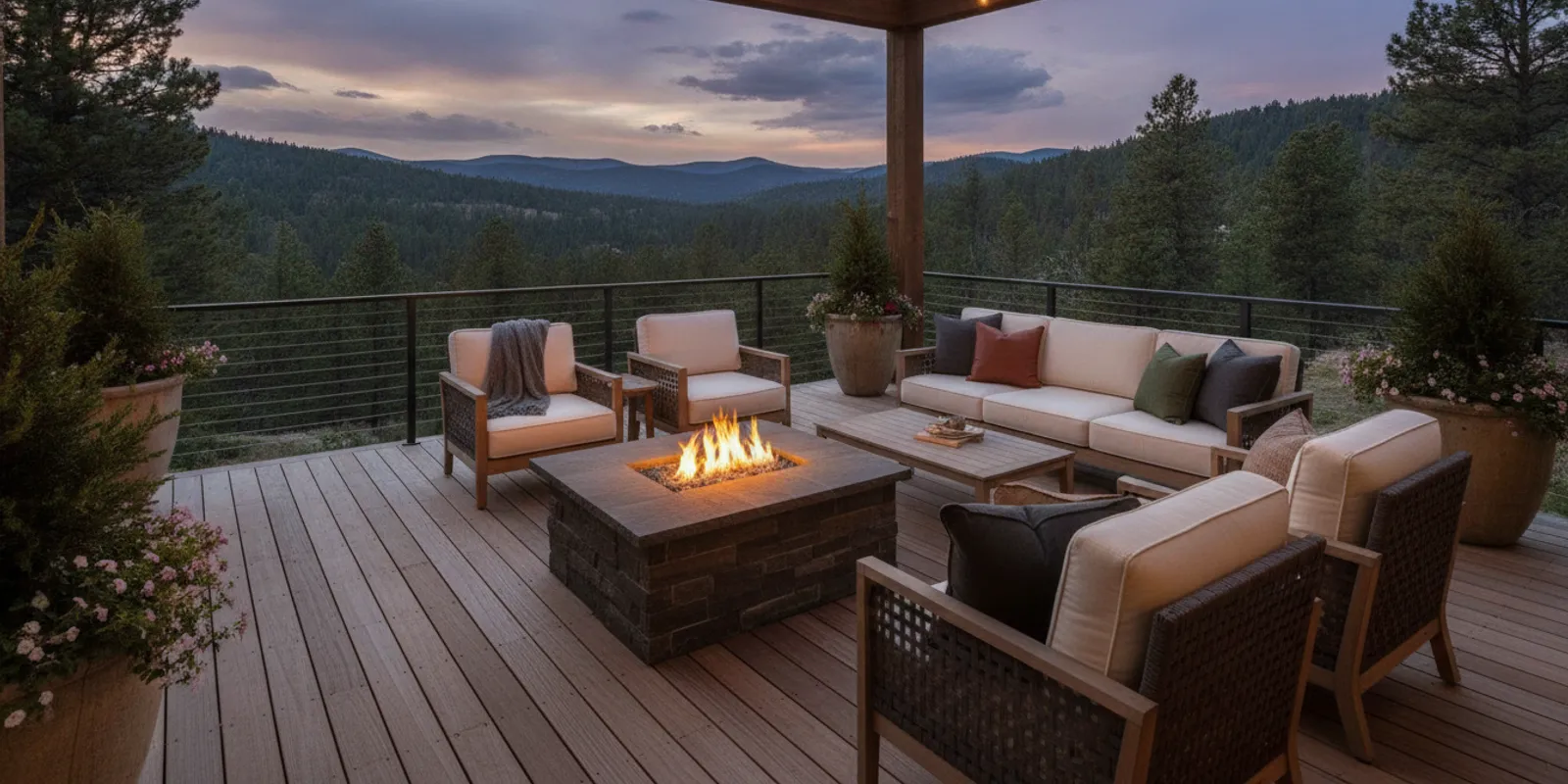
Our fire features are part of a larger outdoor room. The usual gas path is a line from the house meter to the fire pit, sized for the burner specified. That is different from a propane tank under a bench. Natural gas and propane are not interchangeable. The appliance has to be listed for the fuel it will burn. Do not convert a unit, extend a hose, or adapt a connector yourself.
Wood is a different project. It brings smoke, ash, and ember rules that a gas burner does not. Searching for a propane fire pit often mixes wood, portable tanks, and a fixed gas line. Sorting them first keeps the deck plan honest.
The company’s core work is new construction and complete rebuilds. A fire pit or fireplace is planned with the deck, the cover, and the way people move. It is not a one-day add-on to a finished deck. If you want a standalone feature, say so before anyone draws it.
Why a gas line from the meter fits a custom deck
A fixed gas fire pit starts and stops with a control, without a wood pile or an ash pan. There is still inspection, a shutoff, and an owner’s manual. Less cleanup is not the same as leaving a flame unattended. The manual decides ignition, flame height, and shutdown. Those details change by model.
Running the line from the meter is a design decision, not a last-week utility call. The route has to reach the burner without crossing a walk, a stair, or a snow pile. A shutoff needs to stay reachable after the finishes are in. If the only tidy idea is to bury the valve, the layout is wrong.
A line also has to be sized for the burner, with the combustion air the listing calls for. A flexible kit across the boards is not a substitute. The people who pull the permit should stand behind the connection. Call 811 before any digging. Foothills lots hide electric, gas, and irrigation lines a tape measure will not show.
For the wider planning sequence, from the parcel and the fuel choice through materials, see how to build a fire pit in Colorado. That guide is about planning, not a weekend kit. The service page for fire pits and fireplaces shows how these features sit inside a larger outdoor project.
Start with the site, not a fire pit catalog
A deck on a slope, a sheltered bay beside the house, and an open platform with a view ask different questions. Note the edges, the doors, the stairs, the windows, and anything overhead. Note where people already walk. A spot that looks right in a product photo can sit in the wind path or in the only route to the stair.
Watch the same corner at different times. Where does the sun land, and which way does the wind arrive? Does snow drift there? These notes do not replace the listing or a review of the parcel. They stop a pretty location from becoming the only idea.
Sketch the space to scale before a model is locked. Show the burner, the seats, the doors, the stairs, and the path of the gas line back toward the meter. Mark the clearances in the current manual once a model is real. Until then, leave the location provisional. A sketch is a conversation tool. It is not a permit drawing and it is not an engineered plan.
Decide what the evening is for. Some households want chairs around a flame. Others need dining first, with fire seating off to the side. A plan that looks balanced when the deck is empty still has to let people pass without crossing the flame.
Choose a location around clearances and movement
Fitting the burner on the deck is not the test. The listing may set distances from walls, rails, furniture, and anything overhead. Those numbers belong to that model. Keep the manual in the planning set, and confirm what the authority for this parcel requires. One town’s answer does not travel to the next address.
Deck boards do not make a spot safe. A noncombustible pad under the burner does not clear the rail, the house wall, the cover, or the space under an elevated deck. An outdoor rating is not permission to set the unit on any surface. Check the surface, the ventilation, and any shield the manufacturer requires.
People should reach a door, a stair, and a seat without squeezing past the fire. Controls and the shutoff need a clear reach. Do not put the valve in a walking path, and do not make someone lean across the flame to adjust it. The exact access rules come from the selected product and the site, not from a generic diagram.
Chairs move. A layout that works in a rendering gets tight when guests bring extra seats. Measure the deck people will use, including a chair pulled back and the route from the house to the yard.
On an elevated deck, look underneath too. Framing, drainage, and access below can rule a spot in or out. A fire feature is not a patch for a failing deck. That question belongs in a new build or a complete rebuild. See the deck-building journey from concept to completion.
Plan the gas line before the layout is final
Fuel is a layout problem. Name the burner, the fuel it is listed for, and the supply it needs. For the projects we build, that supply is usually a gas line from the meter, not a portable propane tank staged on the deck. Ask where the line can run, where the shutoff sits, and how a technician reaches both after the finishes are on. The manual and the qualified trades answer the product-specific parts.
Do not plan a hidden tank as a backup look. We do not do propane fire pits, and an ordinary deck box is not a tank vault. If a design only works by enclosing a cylinder the listing does not allow, the design changes. Vents, regulators, and access panels are not places to put trim.
Propane fire pit
How fuel arrives: A tank or propane container at the unit.
What to know: Not a service we provide. Tank location, listing, and clearances still apply if you buy one elsewhere.
Gas fire pit on a custom project
How fuel arrives: Usually a gas line from the meter to the burner.
What to know: Planned with a new deck or complete rebuild. Line size, shutoff, and ventilation follow the burner listing and the permit.
Wood fire feature
How fuel arrives: Firewood only, inside the size the district allows.
What to know: Different smoke, ash, and burn-ban rules. Not a gas appliance with a different log set.
Usage still matters. A short evening and a long dinner do not ask the same thing of a burner. Use the product’s stated rate, not a guess about the season. Do not assume a later connection will match a burner chosen now.
Keep the line clear of the outdoor kitchen. A burner and a grill can share a deck and still have separate clearances. If the run passes a covered area, coordinate it with the structure and with the authority that reviews the permit.
If the preferred spot needs an improvised hose, a buried valve nobody can see, or a field conversion, stop. Do not drill, extend, or modify fuel parts from a photo. A qualified installer can say whether the burner and the site match, or whether the layout has to move.
Wind, cold, and a Colorado deck
Wind changes comfort and it changes an open flame. Snow, rain, dust, and hard temperature swings land differently on every lot. A town name does not tell you what this deck needs. Morrison, Evergreen, Conifer, Genesee, Golden, Littleton, and Lakewood are not one climate or one code book.
Read how the selected appliance is listed for wind, wet weather, and cold. Some units have operating limits and a set way to light or shut down. Follow that text. Do not run a flame when you cannot control it, when the unit is damaged in a way the manual warns against, or when a local restriction says not to.
Do not add a wind screen or a planter tight to the burner unless the listing allows it. A screen can change airflow or move material closer to the flame. The same caution applies to umbrellas and loose furniture.
Plan the hours the fire is off. Use a cover only the way the manual allows, and let the unit cool first. Keep snow off the controls and the shutoff. A shovel or a roof slide should not bury the burner or the valve.
A roof over the deck can make the evening usable, and it can also rule the burner out of that bay. Overhead clearance and ventilation are model-specific. An outdoor rating is not permission to sit under every pergola, awning, or ceiling. Compare covered decks and pergolas in this covered deck versus pergola guide before you assume the flame belongs underneath.
Coordinate the fire pit with structure and finishes
A built-in burner changes more than the view. Weight, footprint, and access all meet the framing. An existing deck’s capacity is not something to guess from a catalog weight. Support gets reviewed for the actual project, especially on a new elevated deck or a full replacement.
Pick finishes with the listing open. A material that looks tough can still be wrong next to heat. One noncombustible piece does not make the decking, the trim, or the rail safe. Do not swap a specified material without qualified review.
Water has to leave. A surround should not create a puddle or block the way onto the boards. Ask whether a cover changes the drain path before the stone is set.
The rail and the fire have to share the edge. Keep the walking path and the sightline. A view-friendly rail can still sit too close to a clearance. For how rail types relate to a Colorado deck, read the deck railing options and views guide. It is a design starting point, not a substitute for the appliance listing or the authority on this parcel.
Compare portable propane units with a built-in gas fire pit
A portable propane fire pit is the flexible object people picture first. It can move when the product allows it. It still needs a legal surface, clearances, and a tank location the listing accepts. We do not supply or install that kind of unit. Mobility does not make it part of a custom deck build.
A built-in gas fire pit is the version that belongs in a new deck or a complete rebuild. It needs the line from the meter, a shutoff someone can reach, and clearances drawn before framing is final. The surround has to match the burner. Ask how the unit gets inspected after the party, not only how it photographs.
An integrated feature is one zone in a larger outdoor room. The deck, the cover, the kitchen, and the fire can be drawn together, and the fire can still sit apart from the dining table. That is easier before construction than after the boards are down. Scope still has to be agreed. An isolated pit is not assumed to be its own project.
A household that wants a unit they can roll away is shopping for a product we do not install. A household designing a deck for the long term can talk through a gas fire pit as part of that build. The lot and the authority decide the rest.
Design around the people who will use it
Name the gathering before you name the burner. A quiet seat, a crowd after dinner, and a flame you mostly look at from the sofa are three different decks. Say whether the fire should be visible from inside. Say whether the same floor has to hold a table and room for kids to pass. Those answers pick what leads the plan.
Place seats from the listing’s distances, then from the way out. Keep cushions and paper outside the zone the manual sets. Do not set objects on the burner unless the manufacturer says you can.
A large fire table can eat the path from the door to the stair. A smaller burner can keep that path and change the scale of the room. Draw furniture in use, not bare floor. If two uses fight, split them into zones instead of stacking both on one object.
Check the view from the chairs, not only from the door. A tall surround can block the foothills view you built the deck to see. Shelter at an exposed corner still has to pass the burner’s overhead rules.
Light the stairs, the doors, and the walking routes as their own layer. Flame glow is not a light plan. If deck lighting is part of the build, place it so it does not glare across the fire. Electrical work and the gas line are different trades. Coordinate each one.
How a fire feature sits on a covered or open deck
An open deck is simple until the wind shows up. A cover or a pergola can shape the room and still block the only legal spot for a flame. Product overhead rules decide. Do not put a burner under a cover because the sides are open or because the roof is a certain material.
A roof changes how heat and air move, even with no wood smoke. The manual and the authority say whether that bay is allowed. If it is not, move the fire. A seating area in the open can still feel tied to the covered part of the deck.
A pergola may be open beams, a solid roof, or adjustable louvers. None of those automatically meets an overhead rule. If the roof moves, check every position, not only the one in the rendering. The fire should not depend on someone remembering to open a louver unless the listing says that is an approved setup.
When the plan has several outdoor rooms, give the fire its own zone. If the roof will not allow a flame, an open area nearby can still belong to the same project.
Safety and local rules stay on this parcel
No single distance covers every Colorado deck. The model, the fuel, the structure, and the authority all matter. Follow the current listing. Confirm fire, building, fuel, and land-use rules with the authority for this address. Incorporated towns and unincorporated Jefferson County are not the same rule set.
Ask which reviews apply to the deck and which apply to the burner. A gas line can be a building question separate from the right to have a recreational fire. One approval on another property is not proof for this one.
Use only the fuel and the configuration the listing allows. Do not modify a burner, a valve, a connector, or the gas line yourself. Stop if you see damage, suspect a leak, or the flame looks wrong. Follow the shutdown steps, and call a qualified technician when something is off. If there is a fire or a gas emergency, leave and call emergency services.
Supervise kids and pets around a flame and around surfaces that stay hot. Follow the cool-down warning. Do not leave an operating fire alone, and do not let the cookout pull every adult away from a unit that needs watching. Shut it down the way the manual says when the evening is over.
Keep the clearance zone clear of loose items that can burn. Follow the tank and product instructions if a portable unit is in the picture at all, and do not store a cylinder where it is not allowed. We do not build propane-tank pits, so a custom project should not depend on hiding one. If the layout only works by squeezing the burner between chairs, draw it again.
Weather and burn rules can close a fire on a given day. Wood bans and gas-appliance rules are not always the same notice. Check the manual and whatever restriction applies to this parcel today. A careful design makes safe use easier. It does not override the listing or a district order.
How to plan the feature inside a larger deck project
- Write a short brief. Name who the deck is for, what must stay in the view, and whether you want a new deck or a complete rebuild.
- Record the site: rough size, height, doors, slope, wind, and where snow lands. A site visit can catch what a first sketch misses.
- Choose a burner direction and collect the current manual, clearances, fuel type, and service access before the layout hardens.
- Route the gas line from the meter on the plan, with a shutoff that stays reachable after finishes go in.
- Confirm scope, permits, and who installs the line. A free estimate is not a set of engineered drawings. Design and engineering review come after the estimate is accepted.
- If a field condition forces a move, stop and have the change reviewed. Do not improvise a fuel connection to keep the schedule.
Put the fire on the brief as a design question, not as a spot the rest of the deck must obey. Mountain and foothill lots change by parcel. A detail that was right on another street is not automatically right here.
The consultation and the detailed estimate are free and carry no obligation. Say during that conversation if you pictured a propane tank. We will tell you that is outside what we build, and we can talk through a gas line from the meter when it belongs in the project. You can see the wider outdoor scope on the custom outdoor living page.
Questions to ask before you choose a propane fire pit
- Is this appliance listed for outdoor use and for the exact fuel on this property?
- What clearances, surface, overhead height, ventilation, and access does the current manual require?
- Will fuel come from a gas line at the meter, and can the shutoff be reached after the deck is finished?
- Does the listing allow the surround, cover, or screen in the design?
- How does the burner sit with seats, doors, stairs, rails, and daily walking paths?
- Could a roof, a pergola, or the space under an elevated deck conflict with that spot?
- Which authority reviews this parcel, and what approvals apply to the deck and to the line?
- Who installs, inspects, and services the burner and the gas connection?
- What are the weather limits, and how should the unit be covered when it is off?
- If this spot fails the listing, what layout still serves the way you use the deck?
Keep every answer tied to the model and the address. If a photo skips the manual, ask for the page it came from.
Planning mistakes we see with fire pits
Shopping for a propane fire pit we do not install. A tank unit from a catalog is a different product from a gas fire pit tied to the meter. If the goal is a custom deck, start with the line and the listing, not with a cylinder to hide.
Buying the look before the site is checked. Fuel access, overhead room, and seat clearances fail after the favorite size is already picked. Keep the choice open until the layout has been tested on this deck.
Treating every gas appliance as the same. Burner, ignition, and installation needs change by model. Use the current manual. Do not copy a detail from another brand or from a photo online.
Hiding the shutoff. A clean surround still has to let someone reach the valve, the connection, and the access the listing requires. If the design only works by covering that hardware, change the design.
Ignoring what is overhead. A roof, a pergola, an umbrella, or a tree can disqualify a spot. Open sides do not prove the overhead is allowed. Check the listing for the real arrangement.
Measuring only the burner. The unit can fit while the chairs and the walk do not. Draw furniture, pulled-out chairs, controls, doors, stairs, and the route of the gas line.
Trusting a cover to fix the weather. Covers are product-specific. They do not make an outdoor appliance weatherproof. Follow the steps for cooling, moisture, snow, and storage.
Reading a product label as a permit. A listing answers the appliance. It does not answer the parcel, the structure, or the gas installation. Confirm those with the authority and with qualified trades.
Cutting a finished deck to force a pit in. A built-in unit can change framing and access. Do not cut a completed deck to fit a product without a real review. A new build or a complete rebuild is where the feature can be drawn with the rest.
Frequently asked questions
Is a propane fire pit a good fit for a Colorado deck?
A propane tank unit is not what we install. A gas fire pit can fit a Colorado deck when the burner, the line from the meter, and the structure match the listing and the rules for that property. Wind, snow, and the authority change by lot. Check the manual and have the proposal reviewed. Do not use a statewide yes or no.
Can I put a propane fire pit under a covered deck?
Do not assume yes, for a propane unit or for a gas burner. Overhead clearance, ventilation, and the structure decide, and the authority may add rules. Read the manual for the exact model before you place it. If that bay is not allowed, use a suitable open area or change the design.
Can I use any propane fire pit with a natural-gas connection?
No. The appliance has to be listed for the fuel it will burn. We do not convert propane units to a house line, and we do not install propane fire pits. A gas fire pit on our projects is usually supplied by a line from the meter, using equipment listed for that fuel, with qualified people making the connection.
Can a propane tank be hidden inside a deck box?
Not as part of our work. We do not build propane fire pits or hide tanks in deck boxes. A gas fire feature we include is planned around a line from the meter, with a shutoff and access the listing allows. An ordinary storage box is not a fuel compartment.
Does a propane fire pit need a permanent place on the deck?
A portable propane product is designed to move, and we do not install those. A built-in gas fire pit on a new deck or a rebuild does take a permanent place, because the line, the framing, and the clearances are part of the structure. Portable still does not mean a tank unit can sit anywhere.
Does Colorado Custom Covers & Decks install fire pits as a standalone project?
Fire features are part of a new deck or a complete rebuild unless the owner confirms a different scope. We do not install propane fire pits. If a gas fire pit belongs in the project, the usual approach is a gas line from the meter to the burner. Bring that up in a free consultation so placement and permits can be checked for your parcel.
Explore the design-build process
A fire feature belongs in a Colorado outdoor room when the people, the property, and the listing all agree. On a new deck or a full rebuild, plan the gas line from the meter with the rest of the design. Get a free estimate before the layout hardens.